Level Up Your Outdoor Business

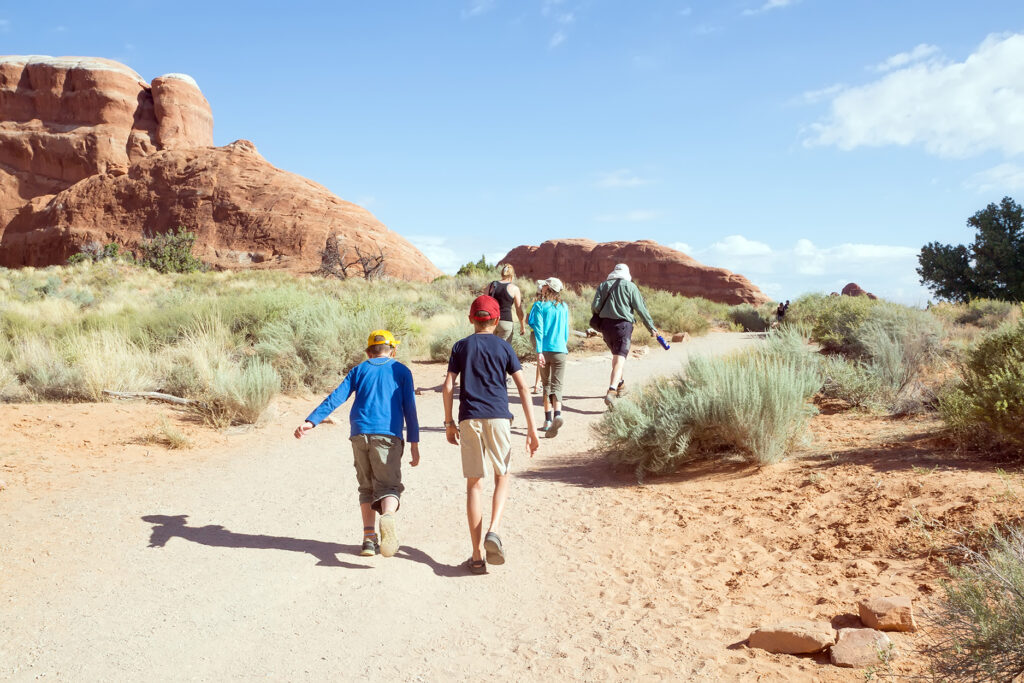
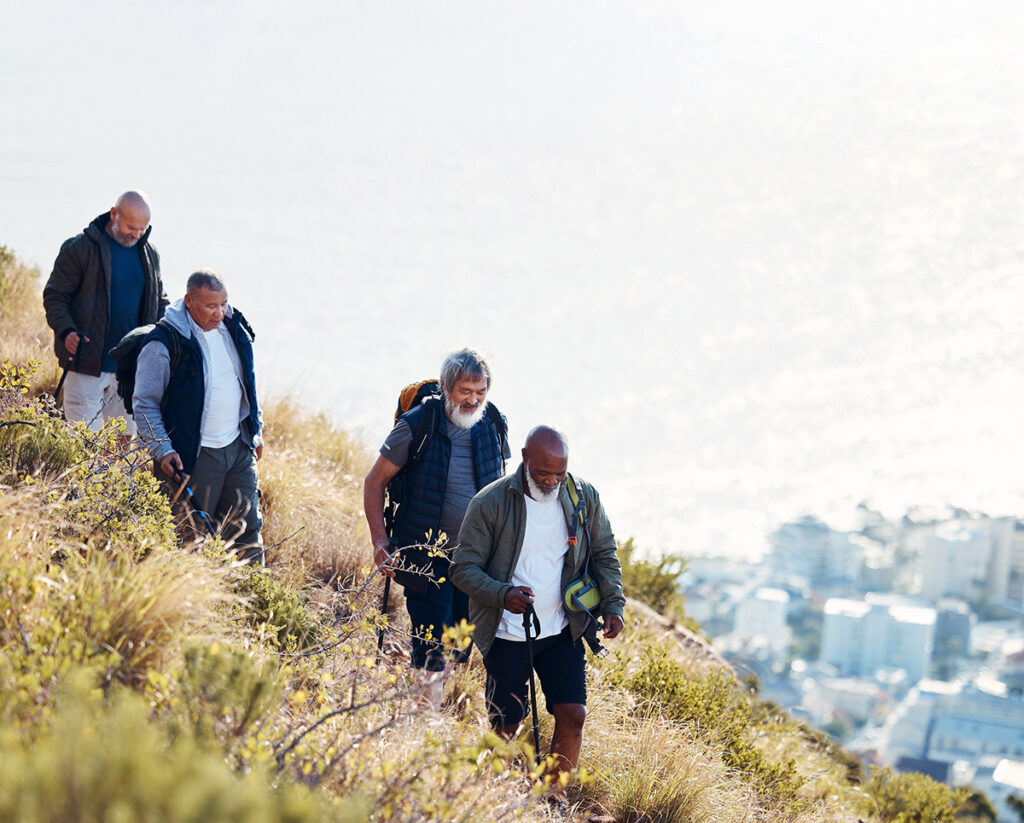
Two people hiking on a mountain

OIA Research Now Offers Key Reports for Purchase – Membership May Be More Economical. 

The Outdoor Industry Association (OIA) understands that data-driven decisions are crucial for business success. That’s why OIA Research exists: to provide actionable insights that boost your bottom line, get more Americans engaged in outdoor recreation, build stronger outdoor businesses and a stronger outdoor economy.   

We dive deep into the outdoor economy utilizing data from Circana (formerly NPD), the Physical Activity Council, and our own research to deliver the business intelligence, participation insights, and market trends that outdoor organizations need to lead with clarity and confidence. 

We also keep you informed about the macroeconomic trends impacting the outdoor market. OIA Research provides updates on customer sentiment, GDP, employment trends, and analyzes the U.S. Bureau of Economic Analysis (BEA) Outdoor Recreation Economic Impacts report each year to help you understand the broader economic context in which your business operates.  

Whether you’re targeting consumers, tracking market trends, or benchmarking your financial performance, OIA Research has you covered. And now, to make these powerful resources more accessible, OIA is offering individual purchases of some of its most valuable reports.  

Unlocking Insights: OIA’s Research Suite 

OIA’s comprehensive research suite provides data-driven insights across a wide range of topics: 

  • Outdoor Consumer Insights: Get to know your customer. This proprietary dataset provides in-depth information on average spend by segment (core, moderate, and casual), motivations for participating in outdoor recreation, the customer journey, and key demographics. Understand who your customers are and what drives their purchasing decisions. The initial report focuses on retail behavior and independent specialty retailers. 
  • Outdoor Participation Trends Report: The definitive source for participation data. This annual report, compiled with the Physical Activity Council, tracks participation rates across 46 different outdoor activities. Access insights into demographics, recreation venues, participation frequency, and trends in new and lost participants. Understand who’s participating, where they’re going, and how participation is changing over time.  
  • Single Sport Reports: For granular insights into specific activities, the Single Sport Reports provide a treasure trove of raw data. Explore participation trends across different sports and activities in detail, utilizing data that includes year-to-year changes, detailed demographic profiles by gender, as well as insights into core versus casual participants and cross-sport involvement. Note: this report focuses on the data itself, without offering in-depth analysis or pre-packaged insights. If you’re a data-driven decision-maker who enjoys digging deep and drawing your own conclusions, these reports are for you. 
  • Category Reports: Dive deep into specific product categories. These reports combine retail trends, consumer intelligence, and participation data to provide a holistic view of the target audience for outdoor footwear and apparel. Understand consumer trends and learn how to capitalize on them in product development, marketing, distribution, and sales. 
  • Retail Sales Trends: Keep your finger on the pulse of the outdoor retail market. Powered by Circana, these reports analyze point-of-sale data to track dollar sales, unit sales, and average retail sales prices for outdoor apparel, equipment, accessories, and footwear. Monthly reporting provides ongoing insights into trends across key channels: Athletic Specialty and Sporting Goods (e.g., Dick’s, Big 5, REI), independent outdoor specialty retailers, and online retail. An annual Retail Sales Report is published each March. 
  • Holiday Report: A timely reference on market conditions and consumer trends likely to impact the 2025 holiday shopping season including consumer spending, retail trends, hot product trends, and more. Due out late September to inform your holiday push. 
  • Financial and Operational Benchmarking Report (2024): Benchmark your company’s financial performance against industry peers. Based on proprietary data from over 50 outdoor companies, this report provides insights into profit and loss, operations costs, sourcing, and more. Compare your performance with others in your manufacturing categories and identify areas for improvement. (Footwear, apparel, hard goods, and outdoor accessories) 
  • Research Consulting and Custom Work: Need tailored insights? OIA Research provides personalized, custom research based on your specific needs. 

Expanded Access: Purchase Key Reports Individually  

Now, you can access some of OIA’s most valuable research without a full membership commitment. The highly sought-after Annual Participation Trends Reports, Single Sport Reports, and the insightful Consumer Insights Report are now available for individual purchase. 

OIA Research is designed to help you: 

  • Make informed decisions based on solid data. 
  • Identify and capitalize on emerging trends. 
  • Target the right consumers with the right products. 
  • Optimize your product offerings and marketing strategies. 
  • Improve your operational efficiency and profitability. 

 Before you click “buy,” be sure to compare the cost with OIA membership. OIA members receive access to all of these reports, along with many other benefits, making membership a potentially more cost-effective solution if you need access to multiple reports. 

Don’t miss out. Unlock the power of OIA Research and take your outdoor business to the next level. 

  • OIA reports, analyses, and custom projects will all assist in bettering your company, and can assist in getting data-driven insights for success. 
  • Reports will be sold to non-members, but membership can sometimes be the less expensive option. 
  • Don’t hesitate to check OIA’s website to explore those options. 

Visit outdoorindustry.org/researchsales.com to explore report purchase options and compare them to the benefits of OIA membership.  

Research Consumervue

KNOW YOUR
AUDIENCE
OIA’s CONSUMERVUE gives you the insights you need to engage outdoor consumers more effectively. Knowing who they are, and what motivates them, is the key to growing participation and building a stronger outdoor business. The full, 120+ page report is free to OIA members.
KNOW YOUR
AUDIENCE
OIA’s CONSUMERVUE gives you the insights you need to engage outdoor consumers more effectively. Knowing who they are, and what motivates them, is the key to growing participation and building a stronger outdoor business. The full, 120+ page report is free to OIA members.
2025 CONSUMER SEGMENT GUIDE
An introduction to the nine consumer segments in the outdoor market and where they fall into three larger groups - Casual, Active and Core participants.

THE SUPER CASUAL SEGMENT

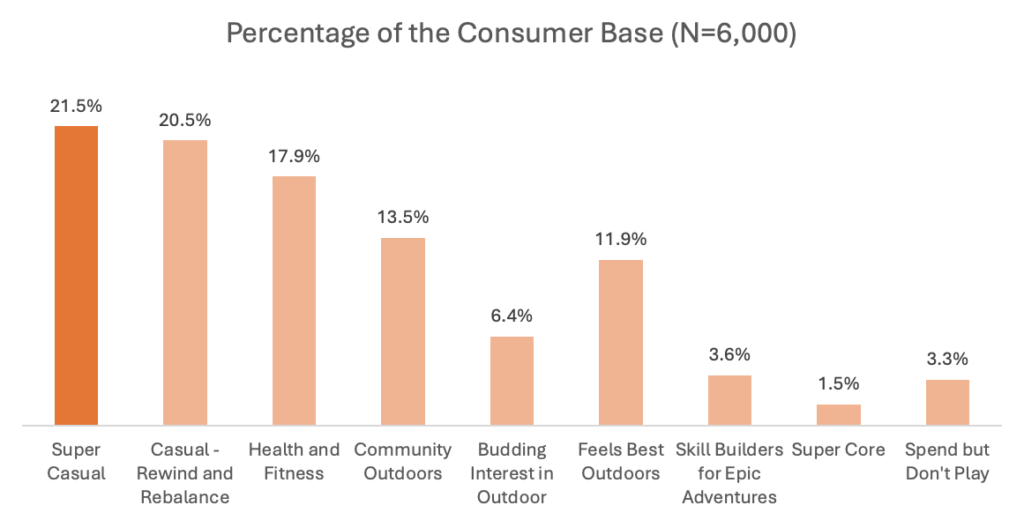
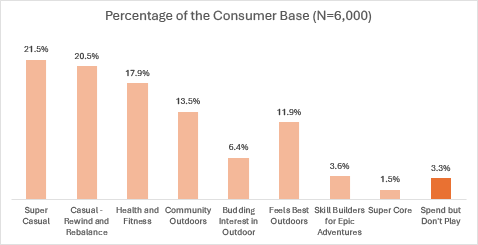
The Super Casual segment, representing 22% of outdoor consumers and the largest of nine identified segments, consists of individuals who engage with the outdoors occasionally and without a lot of intensity or aggression. These consumers prioritize emotional benefits of outdoor activity like calmness, happiness, and confidence over excitement or challenge. They participate in low-barrier activities such as walking, running, and biking and tend to engage less than 49 times annually. Despite their infrequent activity, Super Casuals are willing to spend on gear and apparel—primarily due to wear or to try new activities—with Amazon and mass retailers being their top shopping destinations. Their purchasing decisions are driven by product durability, quality, and aesthetic appeal rather than brand prestige. The segment skews female, with an average age of 42, a majority white racial makeup, and most living in households earning under $80,610. They are slightly less educated than the general population, suggesting that simple, benefits-focused marketing and accessible outdoor experiences are key to engaging them further.

KEY INSIGHTS:

  • Market Size & Identity: Largest outdoor segment: 22% of all outdoor consumers, defined by a low-intensity, occasional approach to outdoor activities.
  • Participation Patterns
    Infrequent participation with typically less than 49 times/year. Preferred activities are walking, running, biking. Least interested in snow sports, hunting, climbing.
  • Purchase Drivers
    Top reasons to purchase are existing gear is worn-out, or they are trying a new activity. Purchases peak at the start of seasonal transitions.

MEMBERS GET ALL THE INSIGHTS. JOIN TODAY.
THE CASUAL – REWIND & REBALANCE SEGMENT

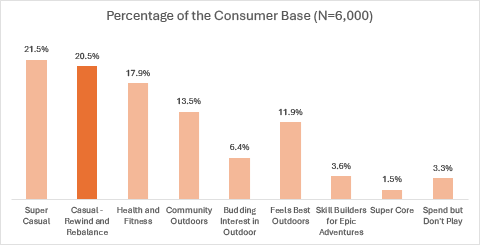
The Casual – Rewind and Rebalance segment represents a significant and emotionally driven portion of the outdoor consumer base, accounting for 21% of all outdoor participants and forming a major part of the “casual” consumer group alongside the Super Casual segment. These individuals prioritize emotional wellness, seeking calm, happiness, and balance—over intensity or thrill in their outdoor experiences. While they participate less frequently than most other segments, they are still valuable to the outdoor industry, with an average six-month spend of over $1,300 on gear and apparel. Their purchase decisions are guided by durability, value, and ethical brand practices, and they tend to research purchases through trusted retail and brand channels rather than influencers or guides. With a strong preference for in-store or blended shopping and a high concentration of women, middle-income earners, and adults over 35, this segment presents major opportunities for brands to deepen relationships through accessible experiences, ethical branding, and strong in-store engagement.

KEY INSIGHTS:

  • Market Size & Identity – Comprises 21% of all outdoor consumers, making it the second largest of nine segments; combined with Super Casuals, they represent 42% of the market.
  • Participation Patterns: Participate less than 49 times per year, with many participating fewer than 11 times annually.
  • Purchase Drivers: Top reason for purchasing new gear is worn-out equipment—durability is key. Also value affordability, brand ethics, and product quality.

MEMBERS GET ALL THE INSIGHTS. JOIN TODAY.

THE HEALTH AND FITNESS SEGMENT

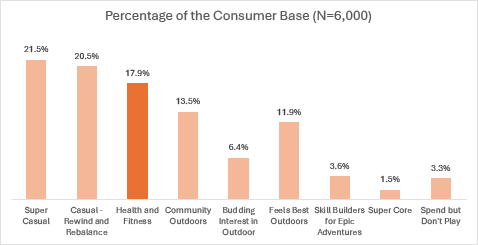
The Health and Fitness segment represents outdoor consumers who prioritize physical well-being, identify their primary motivation for engaging in outdoor activities as improving overall health and fitness. Comprising 18% of all outdoor consumers, this group marks the beginning of the more active and invested segments, participating with moderate intensity and spending at mid-tier levels. While their participation frequency remains relatively low, their chosen activities—such as walking, biking, running, and hiking—emphasize consistent aerobic movement. They seek a mix of emotional rewards including excitement, calm, and focus, and are responsive to products and experiences that support those goals. With a balanced gender split, racial diversity, and a wide distribution of income and education levels, the Health and Fitness segment is a promising and dynamic consumer group for outdoor brands to engage.

KEY INSIGHTS:

  • Market Size & Identity: Makes up 18% of outdoor consumers; third-largest of nine identified segments.
  • Participation Patterns: Participate mostly in walking, biking, running, and hiking; infrequent engagement (typically <49 times/year).
  • Purchase Drivers: Replace worn-out gear, seek performance upgrades, and are drawn to new innovations like hydration gear and technical apparel.

MEMBERS GET ALL THE INSIGHTS. JOIN TODAY.

THE COMMUNITY OUTDOORS SEGMENT

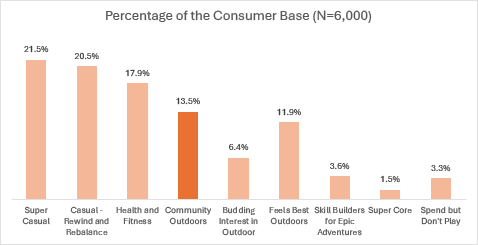
The Community Outdoors segment represents outdoor consumers who prioritize social activities and use outdoor activities as a vehicle for social interaction with family and friends. Community Outdoor segment members identify their primary motivation for engaging in outdoor activities is to spend time with family and friends there. Comprising 13.5% of all outdoor consumers, this group participates frequently enough and spends enough to fit into the “active” category of segments. They seek a mix of emotional rewards including happiness, calm, and balance. This segment is dominated by women who are looking at activities that bring their families and their communities together.

KEY INSIGHTS:

  • Market Size & Identity: 13.5% of outdoor consumers fall into this segment; majority are women (57%) and parents, with an average age of 36 though 43% are over 45.
  • Participation Patterns: Lowest frequency among the active segments (monthly on average, ~3.9 participation score); walking, running, biking, and hiking are most common activities, while hunting, paddling, climbing, and snow sports lag.
  • Purchase Drivers: Buy primarily because old products are worn out, for planned excursions, or as gifts; mothers often lead decision-making.

MEMBERS GET ALL THE INSIGHTS. JOIN TODAY.
THE BUDDING INTEREST IN OUTDOORS SEGMENT

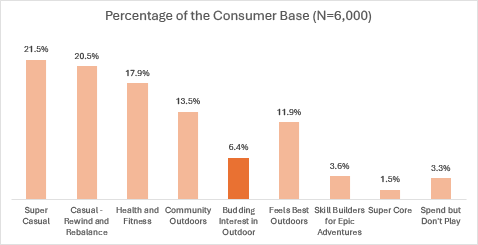
The Budding Interest in Outdoor segment represents a small but highly engaged portion of the outdoor recreation community, comprising 6.4% of outdoor consumers. These individuals are motivated by a growing enthusiasm for outdoor activities such as hiking, camping, and biking, and view the outdoors as a source of fun, excitement, and personal balance. As one of the “Active” segments, they participate in outdoor activity frequently and have notably high gear and apparel spending, reflecting a mid-level intensity in their outdoor pursuits. With a demographic profile skewing slightly older, predominantly white, and almost evenly split by gender, this segment is ripe with opportunity for brands and retailers, especially those offering new experiences, durable gear, and technical innovations.

KEY INSIGHTS:

  • Market Size & Identity: Comprises 6% of outdoor consumers; second in the Active group with high frequency, mid-level intensity, and spending.
  • Participation Patterns: Most active of the Active segments, often engaging in outdoor activities more than 50 times annually.
  • Purchase Drivers: Buy gear primarily due to wear and tear, to start new activities, or to prepare for an upcoming adventure.

MEMBERS GET ALL THE INSIGHTS. JOIN TODAY.

THE FEELS BEST OUTDOORS SEGMENT

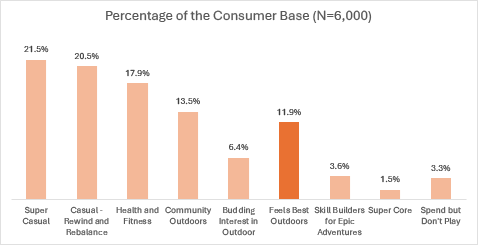
The Feels Best Outdoors segment represents 12% of all outdoor consumers and stands as the fifth largest among nine defined segments. Characterized by a moderate level of intensity and spending, this group finds a strong emotional connection with the outdoors, where they report feeling happiest, calmest, and most excited. With an average age of 42 and nearly even gender split, this segment is predominantly white and middle-aged, with most members participating in a variety of outdoor activities more than 50 times a year. Their approach is not about competition or performance but about emotional well-being, variety, and consistency. They seek durable, functional gear that enhances their time outdoors and prefer shopping through both in-store and online channels, with Amazon and mass retail leading their purchasing destinations.

KEY INSIGHTS:

  • Market Size & Identity: Represents 12% of outdoor consumers; moderately aggressive, high-frequency participants.
  • Participation Patterns: Frequent participants in walking, running, biking, and hiking; open to new activities and challenges.
  • Purchase Drivers: Buy when gear is worn out or when planning their next adventure.

MEMBERS GET ALL THE INSIGHTS. JOIN TODAY.

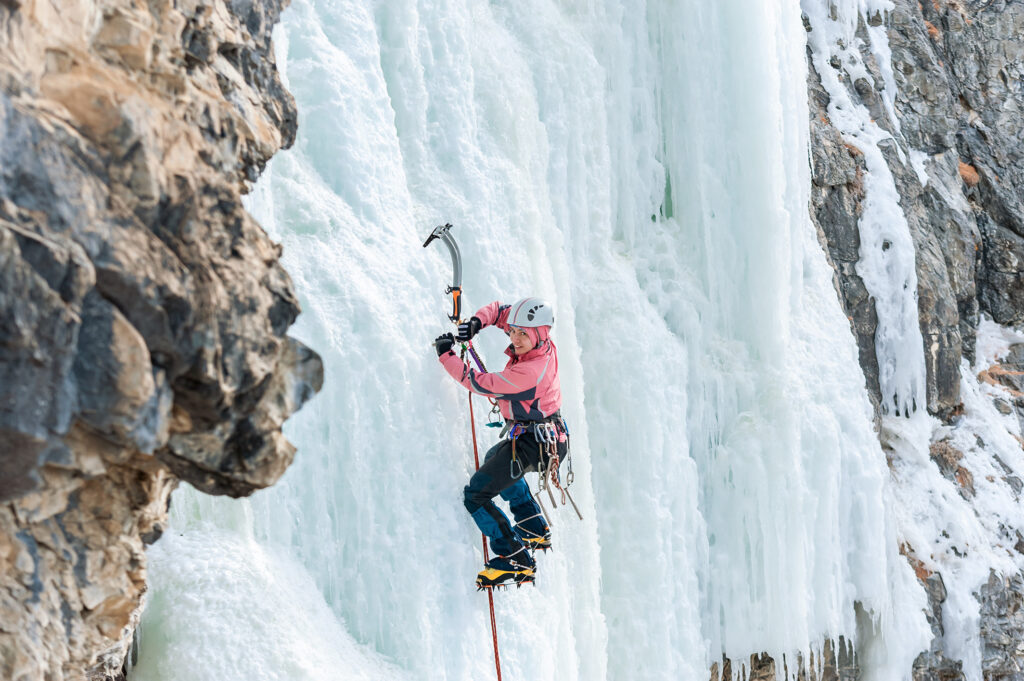
THE SKILL BUILDERS For EPIC ADVENTURES SEGMENT

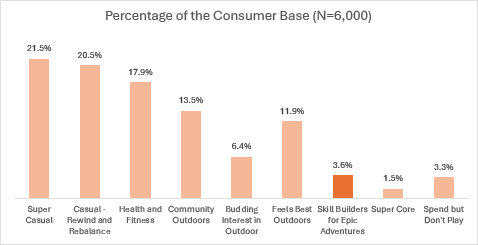
The Skill Builders for Epic Adventures segment consists of highly engaged outdoor enthusiasts who are driven by a desire to improve their skills and abilities in pursuit of more epic and adventurous outdoor experiences. Representing just 4% of outdoor consumers, this segment is small but influential, characterized by high participation rates, significant spending, and an aggressive approach to outdoor activities. Members of this segment are focused on both the emotional rewards of being outside—particularly excitement—and the technical advancement of their performance. They are committed learners, inquisitive shoppers, and aspirational adventurers who actively seek products and experiences that help them level up.

KEY INSIGHTS:

  • Market Size & Identity: The Skill Builders segment comprises 4% of outdoor consumers, the third smallest of nine segments but part of the “Core” group with high intensity and spending.
  • Participation Patterns: They are frequent participants—more than 50 times a year—ranking second in overall activity frequency.
  • Purchase Drivers: Buy when gear is worn out or to improve skills; drawn to innovative designs that improve performance.

MEMBERS GET ALL THE INSIGHTS. JOIN TODAY.

THE SUPER CORE SEGMENT

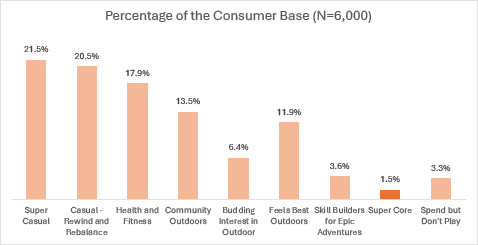
The Super Core segment represents the most intense and dedicated group of outdoor consumers, defined by their aggressive pursuit of outdoor experiences and unmatched frequency of participation. Comprising just 2% of the total outdoor market, this segment may be small in size, but it carries outsized influence due to its high levels of spending, engagement, and brand interaction. These consumers aren’t just outdoor enthusiasts—they live and breathe adventure, constantly pushing boundaries and seeking thrills to escape boredom. With a focus on excitement, performance, and advancement, the Super Core embodies what many in the industry have traditionally assumed all outdoor consumers aspire to be—yet data shows this extreme level of engagement is rare. Their behaviors, motivations, and preferences offer important insights for brands and retailers aiming to serve their most passionate, committed customers.

KEY INSIGHTS:

  • Market Size & Identity: Comprises only 2% of outdoor consumers, just slightly smaller than the Skill Builders segment—together, the Core segments make up only 5% of the total.
  • Participation Patterns: Super Core members engage in outdoor activities over 100 times per year, with top activities including walking, running, fishing, and hiking.
  • Purchase Drivers: Wear and tear, new activity adoption, and desire to level-up skills motivate purchases.

MEMBERS GET ALL THE INSIGHTS. JOIN TODAY.
THE SPEND BUT DON’T PLAY SEGMENT

The Spend but Don’t Play segment represents a unique group within the outdoor consumer base: individuals who do not participate in outdoor activities themselves but still purchase outdoor products, often as gifts or for everyday use. Making up about 3% of all outdoor consumers, this group contributes modestly to the market, spending the least of any segment. While their direct outdoor engagement is nonexistent, their purchases—often apparel, footwear, or gear for others—still play an important role in driving sales during key retail periods like the holidays. Their buying habits highlight the indirect influence of outdoor recreation, as their motivations are rooted in supporting others and expressing care rather than personal participation.

KEY INSIGHTS:

  • Market Size & Identity: Represents 3% of the outdoor consumer base; defined by non-participation in outdoor activities but still buying outdoor products.
  • Participation Patterns: Gift-giving is the main driver of purchases; outdoor footwear and apparel are also used as everyday lifestyle wear.
  • Purchase Drivers: Only 32% of members purchased any outdoor products during the reporting period.

MEMBERS GET ALL THE INSIGHTS. JOIN TODAY.

Unlock the Insights: A Glimpse Into the Full Report
2025 CONSUMER SEGMENT GUIDE
An introduction to the nine consumer segments in the outdoor market and where they fall into three larger groups - Casual, Active and Core participants.

THE SUPER CASUAL SEGMENT

The Super Casual segment, representing 22% of outdoor consumers and the largest of nine identified segments, consists of individuals who engage with the outdoors occasionally and without a lot of intensity or aggression. These consumers prioritize emotional benefits of outdoor activity like calmness, happiness, and confidence over excitement or challenge. They participate in low-barrier activities such as walking, running, and biking and tend to engage less than 49 times annually. Despite their infrequent activity, Super Casuals are willing to spend on gear and apparel—primarily due to wear or to try new activities—with Amazon and mass retailers being their top shopping destinations. Their purchasing decisions are driven by product durability, quality, and aesthetic appeal rather than brand prestige. The segment skews female, with an average age of 42, a majority white racial makeup, and most living in households earning under $80,610. They are slightly less educated than the general population, suggesting that simple, benefits-focused marketing and accessible outdoor experiences are key to engaging them further.

KEY INSIGHTS:

  • Market Size & Identity: Largest outdoor segment: 22% of all outdoor consumers, defined by a low-intensity, occasional approach to outdoor activities.
  • Participation Patterns
    Infrequent participation with typically less than 49 times/year. Preferred activities are walking, running, biking. Least interested in snow sports, hunting, climbing.
  • Purchase Drivers
    Top reasons to purchase are existing gear is worn-out, or they are trying a new activity. Purchases peak at the start of seasonal transitions.

MEMBERS GET ALL THE INSIGHTS. JOIN TODAY.

THE CASUAL – REWIND & REBALANCE SEGMENT

The Casual – Rewind and Rebalance segment represents a significant and emotionally driven portion of the outdoor consumer base, accounting for 21% of all outdoor participants and forming a major part of the “casual” consumer group alongside the Super Casual segment. These individuals prioritize emotional wellness, seeking calm, happiness, and balance—over intensity or thrill in their outdoor experiences. While they participate less frequently than most other segments, they are still valuable to the outdoor industry, with an average six-month spend of over $1,300 on gear and apparel. Their purchase decisions are guided by durability, value, and ethical brand practices, and they tend to research purchases through trusted retail and brand channels rather than influencers or guides. With a strong preference for in-store or blended shopping and a high concentration of women, middle-income earners, and adults over 35, this segment presents major opportunities for brands to deepen relationships through accessible experiences, ethical branding, and strong in-store engagement.

KEY INSIGHTS:

  • Market Size & Identity – Comprises 21% of all outdoor consumers, making it the second largest of nine segments; combined with Super Casuals, they represent 42% of the market.
  • Participation Patterns: Participate less than 49 times per year, with many participating fewer than 11 times annually.
  • Purchase Drivers: Top reason for purchasing new gear is worn-out equipment—durability is key. Also value affordability, brand ethics, and product quality.

MEMBERS GET ALL THE INSIGHTS. JOIN TODAY.

THE HEALTH AND FITNESS SEGMENT

The Health and Fitness segment represents outdoor consumers who prioritize physical well-being, identify their primary motivation for engaging in outdoor activities as improving overall health and fitness. Comprising 18% of all outdoor consumers, this group marks the beginning of the more active and invested segments, participating with moderate intensity and spending at mid-tier levels. While their participation frequency remains relatively low, their chosen activities—such as walking, biking, running, and hiking—emphasize consistent aerobic movement. They seek a mix of emotional rewards including excitement, calm, and focus, and are responsive to products and experiences that support those goals. With a balanced gender split, racial diversity, and a wide distribution of income and education levels, the Health and Fitness segment is a promising and dynamic consumer group for outdoor brands to engage.

KEY INSIGHTS:

  • Market Size & Identity: Makes up 18% of outdoor consumers; third-largest of nine identified segments.
  • Participation Patterns: Participate mostly in walking, biking, running, and hiking; infrequent engagement (typically <49 times/year).
  • Purchase Drivers: Replace worn-out gear, seek performance upgrades, and are drawn to new innovations like hydration gear and technical apparel.

MEMBERS GET ALL THE INSIGHTS. JOIN TODAY.

THE COMMUNITY OUTDOORS SEGMENT

The Community Outdoors segment represents outdoor consumers who prioritize social activities and use outdoor activities as a vehicle for social interaction with family and friends. Community Outdoor segment members identify their primary motivation for engaging in outdoor activities is to spend time with family and friends there. Comprising 13.5% of all outdoor consumers, this group participates frequently enough and spends enough to fit into the “active” category of segments. They seek a mix of emotional rewards including happiness, calm, and balance. This segment is dominated by women who are looking at activities that bring their families and their communities together.

KEY INSIGHTS:

  • Market Size & Identity: 13.5% of outdoor consumers fall into this segment; majority are women (57%) and parents, with an average age of 36 though 43% are over 45.
  • Participation Patterns: Lowest frequency among the active segments (monthly on average, ~3.9 participation score); walking, running, biking, and hiking are most common activities, while hunting, paddling, climbing, and snow sports lag.
  • Purchase Drivers: Buy primarily because old products are worn out, for planned excursions, or as gifts; mothers often lead decision-making.

MEMBERS GET ALL THE INSIGHTS. JOIN TODAY.

THE BUDDING INTEREST IN OUTDOORS SEGMENT

The Budding Interest in Outdoor segment represents a small but highly engaged portion of the outdoor recreation community, comprising 6.4% of outdoor consumers. These individuals are motivated by a growing enthusiasm for outdoor activities such as hiking, camping, and biking, and view the outdoors as a source of fun, excitement, and personal balance. As one of the “Active” segments, they participate in outdoor activity frequently and have notably high gear and apparel spending, reflecting a mid-level intensity in their outdoor pursuits. With a demographic profile skewing slightly older, predominantly white, and almost evenly split by gender, this segment is ripe with opportunity for brands and retailers, especially those offering new experiences, durable gear, and technical innovations.

KEY INSIGHTS:

  • Market Size & Identity: Comprises 6% of outdoor consumers; second in the Active group with high frequency, mid-level intensity, and spending.
  • Participation Patterns: Most active of the Active segments, often engaging in outdoor activities more than 50 times annually.
  • Purchase Drivers: Buy gear primarily due to wear and tear, to start new activities, or to prepare for an upcoming adventure.

MEMBERS GET ALL THE INSIGHTS. JOIN TODAY.

THE FEELS BEST OUTDOORS SEGMENT

The Feels Best Outdoors segment represents 12% of all outdoor consumers and stands as the fifth largest among nine defined segments. Characterized by a moderate level of intensity and spending, this group finds a strong emotional connection with the outdoors, where they report feeling happiest, calmest, and most excited. With an average age of 42 and nearly even gender split, this segment is predominantly white and middle-aged, with most members participating in a variety of outdoor activities more than 50 times a year. Their approach is not about competition or performance but about emotional well-being, variety, and consistency. They seek durable, functional gear that enhances their time outdoors and prefer shopping through both in-store and online channels, with Amazon and mass retail leading their purchasing destinations.

KEY INSIGHTS:

  • Market Size & Identity: Represents 12% of outdoor consumers; moderately aggressive, high-frequency participants.
  • Participation Patterns: Frequent participants in walking, running, biking, and hiking; open to new activities and challenges.
  • Purchase Drivers: Buy when gear is worn out or when planning their next adventure.

MEMBERS GET ALL THE INSIGHTS. JOIN TODAY.

THE SKILL BUILDERS For EPIC ADVENTURES SEGMENT

The Feels Best Outdoors segment represents 12% of all outdoor consumers and stands as the fifth largest among nine defined segments. Characterized by a moderate level of intensity and spending, this group finds a strong emotional connection with the outdoors, where they report feeling happiest, calmest, and most excited. With an average age of 42 and nearly even gender split, this segment is predominantly white and middle-aged, with most members participating in a variety of outdoor activities more than 50 times a year. Their approach is not about competition or performance but about emotional well-being, variety, and consistency. They seek durable, functional gear that enhances their time outdoors and prefer shopping through both in-store and online channels, with Amazon and mass retail leading their purchasing destinations.

KEY INSIGHTS:

  • Market Size & Identity: The Skill Builders segment comprises 4% of outdoor consumers, the third smallest of nine segments but part of the “Core” group with high intensity and spending.
  • Participation Patterns: They are frequent participants—more than 50 times a year—ranking second in overall activity frequency.
  • Purchase Drivers: Buy when gear is worn out or to improve skills; drawn to innovative designs that improve performance.

MEMBERS GET ALL THE INSIGHTS. JOIN TODAY.

THE SUPER CORE SEGMENT

The Super Core segment represents the most intense and dedicated group of outdoor consumers, defined by their aggressive pursuit of outdoor experiences and unmatched frequency of participation. Comprising just 2% of the total outdoor market, this segment may be small in size, but it carries outsized influence due to its high levels of spending, engagement, and brand interaction. These consumers aren’t just outdoor enthusiasts—they live and breathe adventure, constantly pushing boundaries and seeking thrills to escape boredom. With a focus on excitement, performance, and advancement, the Super Core embodies what many in the industry have traditionally assumed all outdoor consumers aspire to be—yet data shows this extreme level of engagement is rare. Their behaviors, motivations, and preferences offer important insights for brands and retailers aiming to serve their most passionate, committed customers.

KEY INSIGHTS:

  • Market Size & Identity: Comprises only 2% of outdoor consumers, just slightly smaller than the Skill Builders segment—together, the Core segments make up only 5% of the total.
  • Participation Patterns: Super Core members engage in outdoor activities over 100 times per year, with top activities including walking, running, fishing, and hiking.
  • Purchase Drivers: Wear and tear, new activity adoption, and desire to level-up skills motivate purchases.

MEMBERS GET ALL THE INSIGHTS. JOIN TODAY.

THE SPEND BUT DON’T PLAY SEGMENT

The Spend but Don’t Play segment represents a unique group within the outdoor consumer base: individuals who do not participate in outdoor activities themselves but still purchase outdoor products, often as gifts or for everyday use. Making up about 3% of all outdoor consumers, this group contributes modestly to the market, spending the least of any segment. While their direct outdoor engagement is nonexistent, their purchases—often apparel, footwear, or gear for others—still play an important role in driving sales during key retail periods like the holidays. Their buying habits highlight the indirect influence of outdoor recreation, as their motivations are rooted in supporting others and expressing care rather than personal participation.

KEY INSIGHTS:

  • Market Size & Identity: Represents 3% of the outdoor consumer base; defined by non-participation in outdoor activities but still buying outdoor products.
  • Participation Patterns: Gift-giving is the main driver of purchases; outdoor footwear and apparel are also used as everyday lifestyle wear.
  • Purchase Drivers: Only 32% of members purchased any outdoor products during the reporting period.

MEMBERS GET ALL THE INSIGHTS. JOIN TODAY.
Unlock the Insights: A Glimpse Into the Full Report
JOIN OIA TODAY!

And get access to all the latest industry data and insights. Together we are a force.

JOIN OIA TODAY!

And get access to all the latest industry data and insights. Together we are a force.

OIA 2025 Outdoor Footwear Report

Step Into the Data: Outdoor Footwear Market Trends

The Outdoor Footwear Report 2025 is the first of its kind, providing a focused analysis of trends within the outdoor footwear segment, focusing on the 150 million participants who are walking for fitness, running, trail running, or backpacking. The executive summary is a preview of the data available in the full report, leveraging sources like Circana, Civic Science, and RunRepeat to offer comprehensive insights into consumer behavior, sales patterns, and emerging opportunities. 

Download the Report>


Are you an OIA member?

Access the report: Click Here


OIA 2025 Outdoor Consumer Trends Report

Understand Today’s Consumers. Shape Tomorrow’s Strategy.

The outdoor consumer has changed. OIA’s 2025 Outdoor Consumer Trends Report reveals how casual and active lifestyle participants now drive over 90% of market spending. Whether you’re a retailer trying to drive in-store growth or a brand looking to design smarter, this free report is your strategic advantage.

Download the Trends Report>


Are you an oia member?

Access the report: Click Here


What Does Retail Growth Look Like In 2025?

By Kyle Frost

The latest Outdoor Industry Association Retail Trends Report shows a market in transition. Participation is at an all-time high, retail dollars are moving, and outdoor gear has officially crossed over into the fashion and lifestyle world. On the surface, things look alright, but when we dig a little deeper, things get far more complicated.

We’re seeing more and more casual consumers getting outside, and they’re buying differently. That shift isn’t inherently bad; more people outside is something everyone has been pushing for. But here’s the tension: despite growth in participation, fewer consumers are leveling up into committed, gear-hungry outdoorists. Casual users tend to buy less and buy on sale. And the more we condition them to expect discounts, the harder it becomes to maintain pricing power or build long-term brand equity.

 
Discount addiction

Sales numbers may look relatively stable, but unit sales have plateaued. The post-COVID discount cycle, with prevalent blanket promotions and endless markdowns, has trained customers to wait for the next deal.. This undermines specialty retail, devalues premium products, and creates a dangerous dependence on discounting to move inventory.

To break that cycle, brands will need more than just a better pricing strategy. They’ll need better engagement through loyalty programs that reward activity, not just spending; educational content that builds confidence; and in-store and online experiences that create an emotional connection. In a flat market, market share is won not with less expensive products, but with more reasons to care about your brand vs others.

Where the spending is

So where are people still spending? Accessories are one of the few bright spots where lifestyle trends and healthy margins still align. They’re convenient entry points and impulse buys and often satisfy the ‘multi-use’ desires of casual participants. But, they can also be trend-driven, which means that pace and ‘taste’ matter. Think fast-turn, lower-volume SKUs that are sustainable, stylish, and versatile. 

Meanwhile, big-ticket technical gear is a tougher sell. Fewer consumers are dropping $1,000 on kayaks. Instead, they’re birding, backyard lounging, or wrapping up overlanding trips at a brewery. These types of big purchases are a harder sell in a market built around comfort and convenience. This doesn’t mean the hardcore segment is gone, but it might mean that the demand isn’t there right now

And we can’t ignore running. It’s still booming, reshaping how brands and buyers approach footwear and apparel and shows no signs of slowing. If your brand doesn’t have a strategy to engage runners—either through product or positioning—you’re missing one of the biggest growth opportunities in the space.

Demographics matter as well, and the industry is still missing the mark with nearly half its audience. Women make up nearly half of outdoor participants and consistently outspend men on apparel, yet men’s categories continue to lead in overall sales. This feels like old news, but it seems like most progress in this vein has been made outside the core outdoor industry. Legacy outdoor brands continue to lag behind more athleisure-forward competitors (both in and outside the “core” outdoor space) who have been able to successfully tap into branding and marketing approaches that resonate more strongly with women outdoorists. 

 
The elephant in the room

While not yet reflected in the data, rising import costs threaten to push prices beyond key psychological thresholds, particularly in categories where demand has been driven by casual, discretionary purchases. Tariffs may be designed to incentivize domestic production, but for many outdoor brands, that’s not realistic. OIA recently hosted a webinar on the new tariffs, and I’ve previously written about how even “Made in the USA” labels often mask a deeper global dependence: zippers from Japan, membranes from Taiwan, stitching in Vietnam, etc. While some brands assemble products domestically or run small-scale production operations, the vast majority of outdoor gear manufacturing still happens in Asia. Brands can’t simply swap in domestic factories without losing access to innovation, capacity, and speed.

When those prices inch up, consumers may hesitate to buy accessories that currently feel like impulse buys. Will the ‘drinkware’ category survive a 20-30% price increase? Running is a hot market, but shoes creeping from $170 to $200 (or more) could slow growth. And big-ticket technical gear? Even tougher to move. Depending on overall economic trends, seasonal or infrequent users may simply drop out of the funnel.

The outdoor market is deeply tied to emotionally driven spending. Customers don’t always “need” gear—they want to feel inspired by it (or look good in the newest styles). As prices inch up, the balance between that emotional and financial value could start to tip in the wrong direction. As prices increase, casual consumers who don’t carry “the outdoors” as part of their core identity will likely spend less. 

The timing couldn’t be worse. Consumers have grown price-sensitive, and the industry has trained them in recent years to expect discounts. As tariffs push MSRPs higher, retailers may struggle to maintain margins without deepening discounts, which cuts against their ability to grow or even survive. It’s a Catch-22: raise prices and lose customers, or discount and destroy margin.

Can circularity move more mainstream?

This is where circularity becomes more than a sustainability talking point. It’s likely that rising prices will push more consumers toward secondhand platforms, whether that’s peer-to-peer marketplaces, local consignment, or white-label resale programs. Some brands have already invested in resale infrastructure, largely in the name of sustainability. But 2025 might be the year where circularity becomes a core part of more business strategies. Not just to meet ESG goals, but to offer consumers more price-accessible options (and sustain brand relationships and revenue) in a market where the price points of new gear feel out of reach, or at least make consumers more apprehensive.

The smartest brands will integrate resale more directly into their digital and retail ecosystems, as well as their overall brand story. Circularity isn’t just a defense against pricing pressure. It can be a way to extend the product lifecycle, capture value from second sales, and keep customers in your ecosystem longer.

 
Where does that leave us?

Tariffs, pricing pressure, and shifting behaviors will test every assumption. There’s no doubt that we’re entering the first months of 2025 with significant uncertainties about almost everything in the industry. But brands that stay nimble, invest in community and experience, and build for both the first purchase and long-term engagement? Those are the ones that may weather the uncertain waters ahead with the greatest stability.

Want to dive deeper into the data behind these trends? Download the 2025 Outdoor Industry Retail Trends Report Executive Summary. and join our free webinar Thursday April 17th at 1 pm MT. OIA members get access to the full report and 2024 data in the OIA Member Portal.

Outdoor Market in Transition: What Does Retail Growth (or Stability) Look Like In 2025?

By Kyle Frost

The latest Outdoor Industry Association Retail Trends Report shows a market in transition. Participation is at an all-time high, retail dollars are moving, and outdoor gear has officially crossed over into the fashion and lifestyle world. On the surface, things look alright, but when we dig a little deeper, things get far more complicated.

We’re seeing more and more casual consumers getting outside, and they’re buying differently. That shift isn’t inherently bad; more people outside is something everyone has been pushing for. But here’s the tension: despite growth in participation, fewer consumers are leveling up into committed, gear-hungry outdoorists. Casual users tend to buy less and buy on sale. And the more we condition them to expect discounts, the harder it becomes to maintain pricing power or build long-term brand equity.


Discount addiction

Sales numbers may look relatively stable, but unit sales have plateaued. The post-COVID discount cycle, with prevalent blanket promotions and endless markdowns, has trained customers to wait for the next deal.. This undermines specialty retail, devalues premium products, and creates a dangerous dependence on discounting to move inventory.

To break that cycle, brands will need more than just a better pricing strategy. They’ll need better engagement through loyalty programs that reward activity, not just spending; educational content that builds confidence; and in-store and online experiences that create an emotional connection. In a flat market, market share is won not with less expensive products, but with more reasons to care about your brand vs others.


Where the spending is

So where are people still spending? Accessories are one of the few bright spots where lifestyle trends and healthy margins still align. They’re convenient entry points and impulse buys and often satisfy the ‘multi-use’ desires of casual participants. But, they can also be trend-driven, which means that pace and ‘taste’ matter. Think fast-turn, lower-volume SKUs that are sustainable, stylish, and versatile. 

Meanwhile, big-ticket technical gear is a tougher sell. Fewer consumers are dropping $1,000 on kayaks. Instead, they’re birding, backyard lounging, or wrapping up overlanding trips at a brewery. These types of big purchases are a harder sell in a market built around comfort and convenience. This doesn’t mean the hardcore segment is gone, but it might mean that the demand isn’t there right now

And we can’t ignore running. It’s still booming, reshaping how brands and buyers approach footwear and apparel and shows no signs of slowing. If your brand doesn’t have a strategy to engage runners—either through product or positioning—you’re missing one of the biggest growth opportunities in the space.

Demographics matter as well, and the industry is still missing the mark with nearly half its audience. Women make up nearly half of outdoor participants and consistently outspend men on apparel, yet men’s categories continue to lead in overall sales. This feels like old news, but it seems like most progress in this vein has been made outside the core outdoor industry. Legacy outdoor brands continue to lag behind more athleisure-forward competitors (both in and outside the “core” outdoor space) who have been able to successfully tap into branding and marketing approaches that resonate more strongly with women outdoorists. 


The elephant in the room

While not yet reflected in the data, rising import costs threaten to push prices beyond key psychological thresholds, particularly in categories where demand has been driven by casual, discretionary purchases. Tariffs may be designed to incentivize domestic production, but for many outdoor brands, that’s not realistic. OIA recently hosted a webinar on the new tariffs, and I’ve previously written about how even “Made in the USA” labels often mask a deeper global dependence: zippers from Japan, membranes from Taiwan, stitching in Vietnam, etc. While some brands assemble products domestically or run small-scale production operations, the vast majority of outdoor gear manufacturing still happens in Asia. Brands can’t simply swap in domestic factories without losing access to innovation, capacity, and speed.

When those prices inch up, consumers may hesitate to buy accessories that currently feel like impulse buys. Will the ‘drinkware’ category survive a 20-30% price increase? Running is a hot market, but shoes creeping from $170 to $200 (or more) could slow growth. And big-ticket technical gear? Even tougher to move. Depending on overall economic trends, seasonal or infrequent users may simply drop out of the funnel.

The outdoor market is deeply tied to emotionally driven spending. Customers don’t always “need” gear—they want to feel inspired by it (or look good in the newest styles). As prices inch up, the balance between that emotional and financial value could start to tip in the wrong direction. As prices increase, casual consumers who don’t carry “the outdoors” as part of their core identity will likely spend less. 

The timing couldn’t be worse. Consumers have grown price-sensitive, and the industry has trained them in recent years to expect discounts. As tariffs push MSRPs higher, retailers may struggle to maintain margins without deepening discounts, which cuts against their ability to grow or even survive. It’s a Catch-22: raise prices and lose customers, or discount and destroy margin.


Can circularity move more mainstream?

This is where circularity becomes more than a sustainability talking point. It’s likely that rising prices will push more consumers toward secondhand platforms, whether that’s peer-to-peer marketplaces, local consignment, or white-label resale programs. Some brands have already invested in resale infrastructure, largely in the name of sustainability. But 2025 might be the year where circularity becomes a core part of more business strategies. Not just to meet ESG goals, but to offer consumers more price-accessible options (and sustain brand relationships and revenue) in a market where the price points of new gear feel out of reach, or at least make consumers more apprehensive.

The smartest brands will integrate resale more directly into their digital and retail ecosystems, as well as their overall brand story. Circularity isn’t just a defense against pricing pressure. It can be a way to extend the product lifecycle, capture value from second sales, and keep customers in your ecosystem longer.


Where does that leave us?

Tariffs, pricing pressure, and shifting behaviors will test every assumption. There’s no doubt that we’re entering the first months of 2025 with significant uncertainties about almost everything in the industry. But brands that stay nimble, invest in community and experience, and build for both the first purchase and long-term engagement? Those are the ones that may weather the uncertain waters ahead with the greatest stability.


Want to dive deeper into the data behind these trends? Download the 2025 Outdoor Industry Retail Trends Report Executive Summary. and join our free webinar Thursday April 17th at 1 pm MT. OIA members get access to the full report and 2024 data in the OIA Member Portal.