



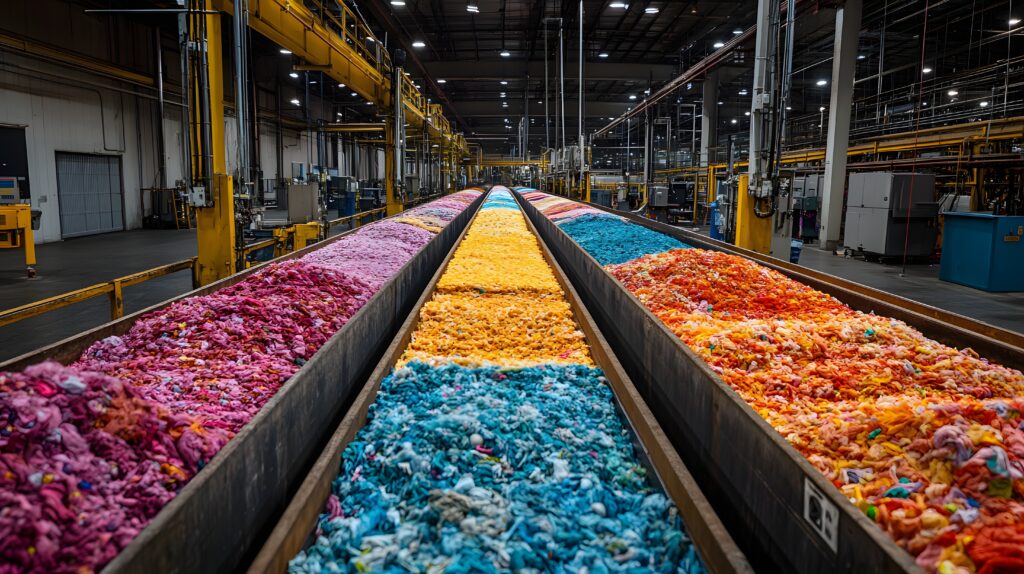
Recycling is a cornerstone of the circular economy, aiming to reuse products and regenerate materials to reduce environmental impacts like greenhouse gas emissions. However, as outdoor companies expand their commitments to using recycled content, a significant challenge has emerged: chemical safety.
Today’s recycling systems are not fully equipped to guarantee that recycled feedstocks are free from hazardous substances. Without strong safeguards, brands and manufacturers risk unintentionally recirculating “legacy” chemicals into their products or even introducing new contaminants caused by the recycling process itself.
Understanding the Infrastructure Gap
Recycling capabilities vary wildly across plastics, textiles, paper, and metals. Most current systems are optimized for clean, single-material streams, but real-world waste is often highly mixed and chemically complex.
In general, there are two common recycling processes that each pose different chemical risks:
- Mechanical Recycling: Dominates the market but tends to recirculate rather than remove chemicals, leaving new products vulnerable to contamination.
- Molecular (Chemical) Recycling: Can remove unwanted substances, but requires more energy and may result in chemicals of concern released into the environment surrounding the recycling facility.
Critical Risk Areas for the Outdoor Industry
For our industry, textiles represent the most critical risk area. Currently, less than 1% of collected textiles are recycled back into new fibers, but those that are often come from sources with unknown chemical histories.
Factors like limited ingredient transparency and multi-material construction increase the likelihood that restricted substances, such as PFAS, phthalates, heavy metals, and flame retardants, make it into the final product. These risks extend to other materials as well:
- Plastics: Often contain non-intentionally added substances (NIAS) and residual chemicals.
- Metals: Can inadvertently introduce toxic heavy metals if waste streams are poorly characterized.
- Paper: Requires careful management to avoid contaminants found in original coatings and inks.
A Path Toward Non-Toxic Circularity
There is currently no comprehensive, affordable testing protocol that can reliably identify every contaminant in every batch of recycled feedstock. And while certifications help manage risk, they do not completely eliminate it. Rather, success depends on rigorous implementation and total supply-chain transparency.
To move forward, outdoor companies must adopt a systems-level approach to chemical risk. This includes:
Evaluating the origin of feedstocks and sorting processes.
Assessing contamination risks specific to material types.
Collaborating across industry, academia, and policy to develop safer chemistries and better traceability.
Learn About Chemical Safety with OIA’s New Guidebook
The Outdoor Industry Association (OIA) has developed a comprehensive “Chemical Risks of Recycled Materials Guidebook” to equip outdoor companies with the tools and insights needed to safely source recycled materials. It outlines risks by material category, compares recycling technologies, and provides a practical framework for evaluating suppliers and assessing contamination risk based on four key categories:
- Original material use, application, and industry.
- Collection, sorting, and other pre-processing methods.
- Recycling methods and quality control specifications.
- End-use application.
The guidebook is currently available in the OIA Mobilize platform. Not an OIA Support Plus or Leadership member but want to learn more? Get in touch today.